
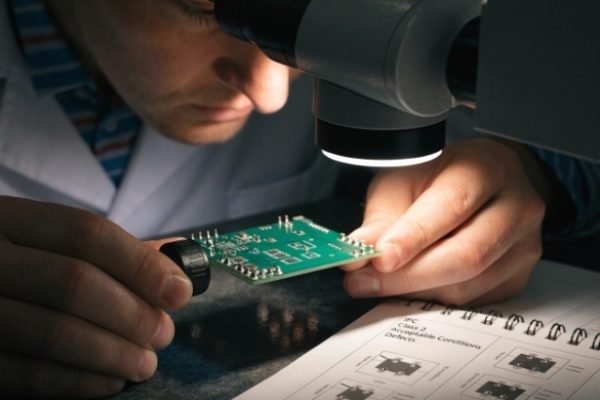
Struggling to verify a PCBA supplier's quality? Unsure which certifications actually matter? Choosing the wrong partner can lead to costly failures and delays in your project.
A high-quality PCBA manufacturer must have ISO 9001 for quality management and adhere to IPC standards for assembly. For specific markets, look for UL for safety, and RoHS/REACH for environmental compliance. These certifications ensure reliability, safety, and market access for your products.
I've seen many clients get confused by the alphabet soup of certifications. It's easy to get lost. But understanding these key standards is crucial for protecting your investment and ensuring your product succeeds. Let's break down the most important ones so you know exactly what to look for when choosing your manufacturing partner. This knowledge will give you confidence in your supply chain.
Why is ISO 9001 the foundation for any reliable PCBA partner?
Worried about inconsistent quality from your supplier? This often stems from a lack of standardized processes. ISO 9001 certification directly addresses this by mandating a robust quality management system.
ISO 9001 is the international standard for a Quality Management System (QMS). It proves a manufacturer has established processes for consistency, customer satisfaction, and continual improvement. It's the baseline guarantee that your supplier is serious about quality control from start to finish.
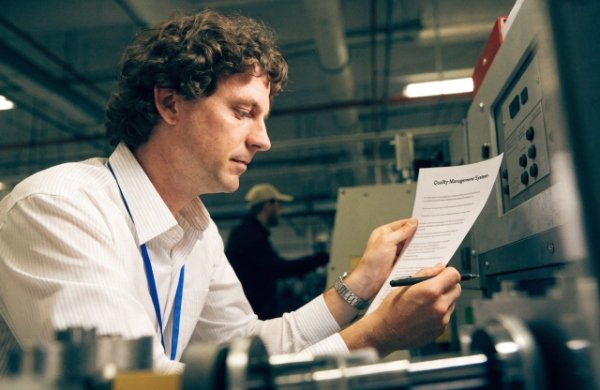
I always tell my clients that ISO 9001 isn't just a piece of paper. It's a commitment to a way of working. It means we have documented everything, from how we handle a new customer inquiry to how we inspect the final assembled board. This standard forces us to be systematic. For example, it requires us to have clear procedures for corrective actions. If a problem occurs, we don't just fix it; we investigate the root cause and change our process to prevent it from happening again. This is vital in PCBA manufacturing, where a tiny error can have huge consequences. It also pushes for a customer-centric approach. We actively gather feedback and use it to improve our services. Think of it as a framework for reliability and a promise that we are organized and accountable.
| ISO 9001 Principle | What It Means for Your PCBA Project |
|---|---|
| Customer Focus | Your requirements are understood and consistently met. |
| Process Approach | All steps (sourcing, assembly, testing) are managed as one system. |
| Continual Improvement | The manufacturer is always getting better and more efficient. |
| Evidence-based Decisions | Choices are made based on data, not guesswork. |
How do IPC standards guarantee your PCBA quality?
Are your boards failing unexpectedly? Inconsistent soldering or component placement could be the culprit. Without a shared technical language, "good quality" is subjective and risky for your project.
IPC standards are the globally recognized acceptance criteria for electronics assembly. A manufacturer following IPC-A-610, for example, ensures that every solder joint, component placement, and cleaning process meets a specific, measurable quality level, reducing field failures and ensuring product reliability.
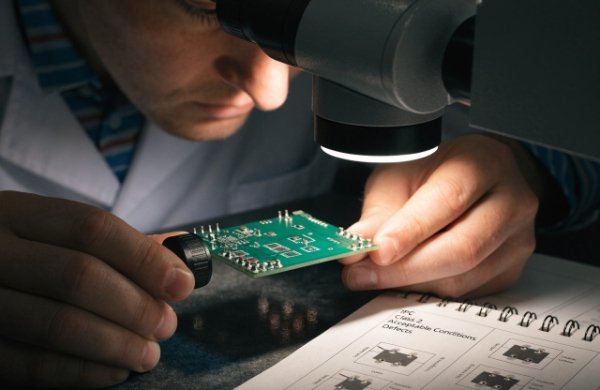
In my factory, IPC standards are our bible. When we talk about a "good" solder joint, we are not just using our opinion. We are referring to the specific visual criteria in the IPC-A-610 handbook. This standard defines three classes of products. Class 1 is for general consumer electronics. Class 2 is for dedicated service electronics where reliability is important. Class 3 is for high-reliability or life-support systems, like in the medical or aerospace fields. We always ask our clients which class their product falls into. This ensures we apply the right level of inspection and rigor. For example, the amount of solder fill required for a through-hole component is different for Class 2 versus Class 3. Having IPC-certified trainers on staff means our technicians are all working to the same high standard. It removes ambiguity and ensures consistency across every single board we produce for you.
Is UL certification necessary for your electronic product's safety?
Launching a product in North America? A product failure that causes a fire or electrical shock could be a disaster for your brand. UL certification is the key to proving your product's safety.
UL (Underwriters Laboratories) certification means a product has been tested to meet specific safety standards. For PCBA manufacturers, holding a UL recognition (like UL 796 for PCBs) proves they can build boards that meet these strict fire and electrical safety requirements.
Many of my clients, especially those targeting the US and Canadian markets, ask me about UL. It's important to understand the difference. Your final product gets a "UL Listing." Our facility, as a component manufacturer, gets a "UL Recognition." This means we are authorized to produce PCBs that can be part of a UL-listed final product. We follow specific rules about materials, board thickness, and trace spacing to ensure the board will not catch fire or cause an electrical hazard under fault conditions. For instance, we must use UL-certified laminates (like FR-4) and maintain specific traceability records for them. This is not optional for many product categories. Without a PCBA built by a UL-recognized facility, getting your end-product UL listed becomes much harder, more expensive, and time-consuming. It’s a critical step for market access and liability protection.
What do RoHS and REACH certifications mean for your global market access?
Planning to sell in Europe or other eco-conscious regions? Your product could be blocked by customs if it contains banned substances. This is where RoHS and REACH compliance is essential.
RoHS (Restriction of Hazardous Substances) and REACH (Registration, Evaluation, Authorisation and Restriction of Chemicals) are European regulations. A compliant PCBA manufacturer ensures your product is free from banned materials like lead, mercury, and cadmium, which is mandatory for selling in the EU and many other countries.

I remember when RoHS first became a major topic. It changed everything in our industry, especially soldering. We had to transition from traditional tin-lead solder to lead-free alternatives. This required new equipment, different temperature profiles, and retraining for all our technicians. Today, being RoHS compliant is standard practice for us. It means we have a strict system for material control. Every component we source, every solder paste we use, and every PCB substrate is verified for compliance. We provide a Certificate of Conformance (CoC) with our shipments to prove it. REACH is even broader, covering thousands of chemicals. While it primarily affects chemical manufacturers, we, as a downstream user, must ensure our suppliers are compliant. This protects our clients from any supply chain disruptions or legal issues when entering the European market. It's a guarantee of environmental responsibility and your product's market readiness.
Does your PCBA supplier need automotive-grade certifications like IATF 16949?
Developing an automotive or high-reliability industrial product? The extreme reliability requirements mean a standard PCBA process is not enough. A failure here could have severe consequences, demanding a higher level of quality assurance.
IATF 16949 is the quality management standard for the automotive industry. It builds on ISO 9001 with much stricter requirements for process control, risk management, and traceability. Choosing an IATF-certified partner is crucial for any automotive electronics project to ensure maximum reliability.
While we serve many industries, our experience with clients in the automotive and industrial sectors has taught us the value of IATF 16949 principles. Even if your product is not for a car, a supplier familiar with this standard brings a higher level of discipline to your project. IATF 16949 requires advanced quality planning tools like FMEA (Failure Mode and Effects Analysis). Before we even start production, we analyze what could possibly go wrong with the process and build controls to prevent it. It also demands extremely rigorous traceability. We can trace every single component on a specific board back to its original reel and batch number. This is critical if a defect is found later in the field. While not every project needs full IATF certification, partnering with a manufacturer who understands and applies its core principles gives you an extra layer of confidence in the robustness and reliability of your final product.
Conclusion
In short, certifications like ISO 9001, IPC, UL, and RoHS are not just badges. They are proof of a manufacturer's commitment to quality, safety, and your product's success.