
Choosing a PCBA partner is a huge decision. The wrong choice can lead to delays and budget overruns. Let's break down the key factors to help you make the best decision.
The best choice depends on your project's specific needs. Local manufacturers offer better communication and faster turnarounds, which is great for prototypes. Offshore manufacturers, like us in Shenzhen, often provide significant cost advantages and supply chain access for large-volume production, making them ideal for scaling your business.
The decision isn't just about cost or location. It involves weighing several critical factors that can impact your project's success. Over the years, I've helped countless clients navigate this choice, from startups in Canada to large industrial firms in Germany. I want to share what I've learned from my experience as a one-stop PCBA solution provider. Let's dive deeper into the pros and cons of each option so you can choose the right path for your business.
What are the real costs of local vs. offshore manufacturing?
Worried about your budget? The initial price quote is just the beginning of the story. Hidden fees and shipping costs can quickly inflate your expenses, turning a good deal into a headache.
Offshore manufacturers, particularly in regions like Shenzhen, generally offer lower labor and production costs for large-scale runs. Local manufacturers might have higher unit prices but can save you money on shipping, tariffs, and potential travel expenses for on-site visits, especially for smaller batches.
When you look at a price quote, you have to consider the Total Cost of Ownership (TCO). While the per-unit price from an offshore partner like us is often lower due to economies of scale, you must factor in international shipping and import duties. I remember a client from Australia who was hesitant about these extra costs for their new communication device. We created a transparent cost breakdown for them. Their local quote was 40% higher per unit. Even after factoring in air freight and tariffs for their 20,000-unit order, our one-stop solution in Shenzhen saved them over 20% on their total production cost. This is why we focus on B2B large-volume manufacturing, where these savings really add up. Local manufacturing, on the other hand, simplifies the financial side with no international complexities. To make a true comparison, you should always look at the complete picture.
| Cost Factor | Local Manufacturer | Offshore Manufacturer (e.g., Shenzhen) |
|---|---|---|
| Unit Price | Generally Higher | Generally Lower for Mass Production |
| Labor Costs | High | Low |
| Tooling/NRE | Can be high | Often more competitive |
| Shipping | Low, domestic rates | Higher, international freight |
| Tariffs & Duties | None | Varies by country, must be calculated |
| Travel Costs | Low for on-site visits | High for on-site visits |
How does location impact communication and project management?
Are you afraid of miscommunications derailing your project timeline? Time zone differences and language barriers can lead to misunderstandings, costly errors, and frustrating delays. Let's see how to manage this.
Local manufacturers offer same-time-zone communication and easy in-person visits. However, experienced offshore partners like us have dedicated English-speaking project managers and robust systems to ensure seamless collaboration across continents, especially for complex, large-scale B2B projects.
Clear communication is the backbone of any successful manufacturing project. With a local partner, it's easy. You're in the same time zone and can pick up the phone or even drive to the facility to sort out an issue. This is a huge advantage for complex prototypes that require a lot of back-and-forth.
However, managing communication with an offshore partner is very doable if you choose the right one. I recall a client from the UK developing a new IoT product for the industrial sector. They were worried about the time difference. We assigned them a dedicated project manager who was their single point of contact. We used a shared project management portal for daily updates and scheduled weekly video calls at a time that worked for both of us. This proactive approach meant that questions were answered within one business day. As a B2B-focused manufacturer serving global clients, our professional teams are fluent in English and trained in technical terminology. We understand the importance of clear, consistent communication to keep your mass production schedule on track.
What about quality control and supply chain access?
Concerned that lower costs might mean lower quality? Poor quality control can result in faulty products and recalls, wiping out any initial cost savings and damaging your brand's reputation.
Local manufacturers allow for easy on-site inspections. However, established offshore hubs like Shenzhen offer unparalleled access to a vast components supply chain and have mature, certified quality control processes like AOI, X-ray, and functional testing to meet stringent international standards for bulk production.
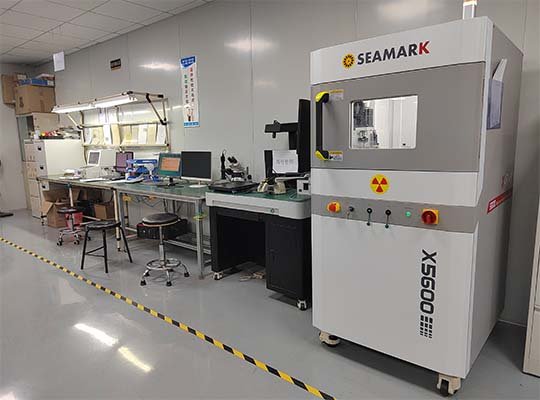
Quality is non-negotiable. With a local manufacturer, you have the peace of mind of being able to visit the production line and see the quality control for yourself. This is comforting. The potential downside is that their access to a wide range of electronic components might be limited or more expensive.
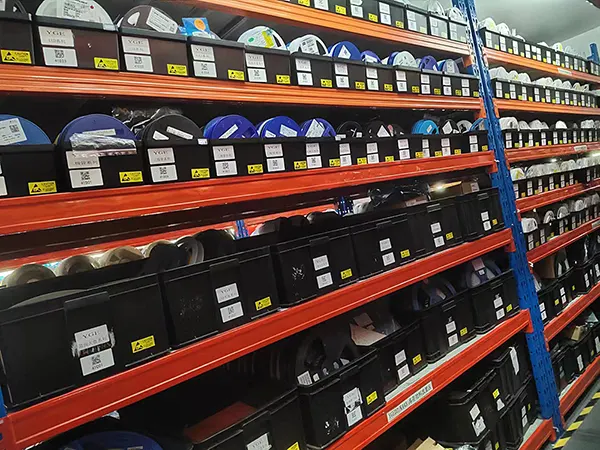
In a global manufacturing hub like Shenzhen, the situation is different. We live and breathe electronics. Our reputation with international clients from demanding markets like France and Italy depends entirely on our quality. As a one-stop factory, we manage the entire process—from sourcing original components to multi-stage testing. For a medical device client from Switzerland, we provided full traceability documents for every part and conducted rigorous burn-in testing to meet their industry's strict safety standards. Our location gives us direct access to a massive ecosystem of component suppliers. This means we can source high-quality, genuine parts quickly and cost-effectively, which is a critical advantage for large-volume manufacturing where supply chain stability is key to avoiding production delays. We use comprehensive testing, including AOI and X-ray inspection, to ensure every board that leaves our factory meets your exact specifications.
Which option is better for my specific project needs?
Still unsure which path is right for your unique project? A one-size-fits-all approach doesn't work. Choosing the wrong partner for your specific stage of development can be a costly mistake.
For rapid prototyping and small batches where hands-on collaboration is key, a local partner is often best. For large-volume, cost-sensitive mass production, a professional offshore one-stop manufacturer like us offers significant advantages in price and supply chain efficiency.
The best choice really depends on where you are in your product lifecycle. Early-stage prototypes often benefit from the high-touch collaboration a local manufacturer provides. The ability to make quick revisions and hold face-to-face meetings is invaluable.
However, once your design is finalized and you're ready to scale, the economics shift. For the large-volume production we handle for clients in the automotive, IoT, and new energy sectors, an offshore partner is the logical choice. The cost savings on thousands of units are substantial. Our factory is built for this. We integrate PCB fabrication, component sourcing, and assembly under one roof. This turnkey solution simplifies your logistics and reduces management overhead, freeing you to focus on your core business. We are not a fit for small hobbyist projects; we are built to be a reliable B2B manufacturing partner for enterprises ready for mass production.
| Project Stage | Best Fit | Key Considerations |
|---|---|---|
| Rapid Prototyping | Local Manufacturer | Fast turns, easy communication, hands-on changes. |
| Small to Medium Batch | Either / Hybrid | Balance of cost vs. convenience. Some use local for first batches. |
| Large-Volume Mass Production | Offshore Manufacturer | Significant cost savings, access to supply chain, scalability. |
| High-Complexity / Specialized | Professional Offshore | Access to specialized tech (HDI, Rigid-Flex) and expertise. |
Conclusion
The choice between local and offshore isn't about one being better, but which is better for you. Evaluate your project's volume, complexity, and budget to find the right partner.