
Struggling to manage dozens of suppliers for your PCB project? This juggling act often leads to delays and headaches. Choosing the right assembly model can change everything.
The main difference is who buys the parts. With turnkey PCB assembly, your manufacturer handles everything from sourcing components to final assembly. In consigned assembly, you purchase and provide all the parts to the manufacturer, who then only performs the assembly.
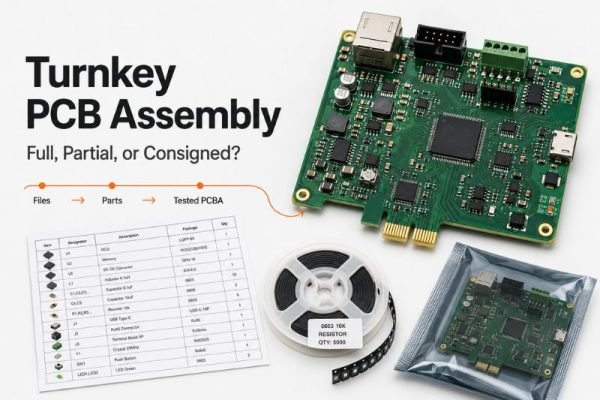
Deciding between these two paths can feel overwhelming, but it doesn't have to be. Each model has its own set of benefits and is suited for different types of projects. As someone who has managed countless PCB projects for clients worldwide, from industrial firms in Germany to IoT startups in Canada, I've seen firsthand how the right choice can make or break a production timeline. Let's break down each option so you can confidently decide which one is the perfect fit for your next project.
What Exactly Is Turnkey PCB Assembly?
Tired of managing component sourcing, inventory, and logistics? This administrative work eats up valuable time you could be spending on design and innovation. Turnkey assembly solves this by offloading it all.
Turnkey PCB assembly is an all-in-one solution where your manufacturing partner manages the entire process. This includes fabricating the bare boards, sourcing all the electronic components on your BOM, and performing the final assembly. It’s a completely hands-off approach for you.
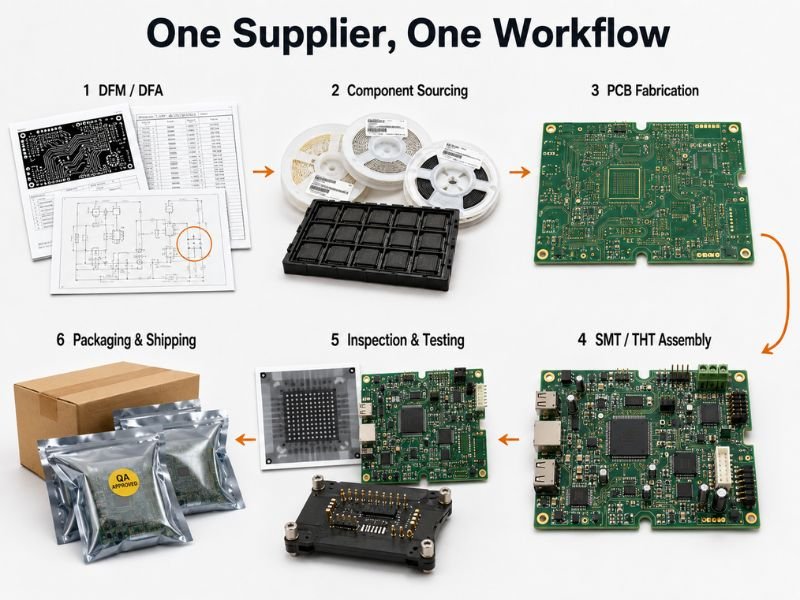
With a full turnkey service, the process is streamlined and efficient. You provide us with your design files (like Gerbers and a Bill of Materials or BOM), and we take it from there. Our team leverages a mature global supply chain to source every single component, from the most common resistors to complex microcontrollers. This is a huge advantage. I remember working with a new AI hardware company from the UK that was on a tight deadline. They were struggling to find a specific processor due to global shortages. Because we have established relationships with a wide network of distributors, we were able to locate the parts and keep their project on schedule. This is the power of a turnkey solution; you're not just getting an assembler, you're getting a procurement expert and a logistics partner all in one. This single point of contact eliminates communication breakdowns and significantly speeds up your time-to-market.
| Turnkey Assembly | Pros | Cons |
|---|---|---|
| Process | Single point of contact, streamlined communication. | Less control over specific component suppliers. |
| Speed | Significantly faster time-to-market. | May have slightly higher initial quote price. |
| Cost | Reduces your internal administrative costs. | Less visibility into individual component costs. |
| Convenience | We handle all logistics and part sourcing. | Not ideal if you have existing component inventory. |
How Does Consigned PCB Assembly Work?
Do you have very specific, rare, or proprietary components for your project? You might worry a manufacturer won't find the exact parts. Consigned assembly gives you total control.
In consigned PCB assembly, you are responsible for purchasing and providing all the necessary electronic components to your assembly partner. The manufacturer's role is strictly to assemble the boards using the parts you have "consigned" to them for the project.
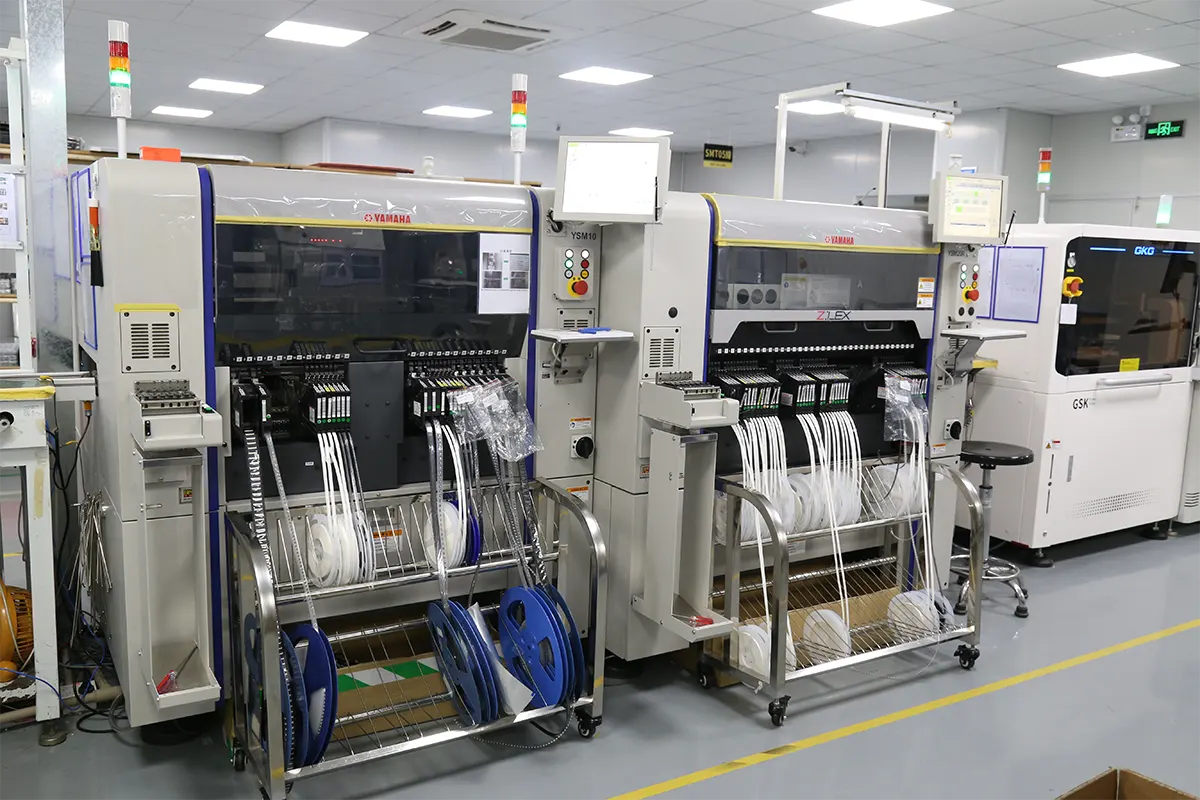
This model puts you in the driver's seat of your supply chain. You source every capacitor, resistor, and integrated circuit. Once you have all the parts, you package them into kits and ship them to your assembly house. We then take your kits, verify the contents against your BOM—a process called kitting—and move forward with assembly. This approach is perfect for companies that have existing inventory, benefit from large-volume purchasing power, or use custom-made components that aren't available on the open market. For example, a medical device client from Switzerland we work with has a proprietary sensor they manufacture in-house. For them, a consigned model is the only option. However, it places the full responsibility for logistics on you. Any delays in your component shipping or errors in your parts kit will directly impact the production schedule.
| Consigned Assembly | Pros | Cons |
|---|---|---|
| Control | Full control over component source and quality. | You are responsible for all logistics and shipping. |
| Cost | Can be cheaper if you have better purchasing power. | Any part shortages or incorrect parts cause delays. |
| Inventory | Allows you to use existing or excess stock. | Requires significant internal resource management. |
| Proprietary Parts | Ideal for projects with custom or rare components. | More complex to manage than a turnkey solution. |
What About "Partial" or "Hybrid" PCB Assembly?
Does a fully hands-off or a fully hands-on approach not feel quite right? You want control over critical parts but need help with the rest. A hybrid model can be the perfect solution.
Partial, or "hybrid," PCB assembly is a flexible middle ground. In this model, you supply some of the components (often the critical or hard-to-find ones), and your assembly partner sources the remaining common parts. It combines control with convenience.
The partial consigned model offers the best of both worlds and has become increasingly popular with our clients. It works beautifully when you have a few key components that are either very expensive, have long lead times, or are proprietary to your design. By consigning these specific parts, you maintain control where it matters most. You let us, your manufacturing partner, handle the sourcing of the hundreds of common passive components. This saves your procurement team a massive amount of time and effort. I worked with an industrial controls manufacturer from Germany on a project like this. They consigned a specialized controller IC they had in stock, and we sourced the other 200+ line items on their BOM. The key to success here is crystal-clear communication. The BOM must clearly state which party is responsible for sourcing each part to avoid any confusion or delays. This flexibility is a core part of our B2B-focused service.
| Aspect | Turnkey | Consigned | Partial (Hybrid) |
|---|---|---|---|
| Component Sourcing | Manufacturer sources all parts. | Client sources all parts. | Client and manufacturer both source parts. |
| Client Effort | Minimal | High | Medium |
| Best For | Speed, convenience, scaling production. | Full control, using proprietary parts. | Balance of control and convenience. |
| Risk Management | Manufacturer manages supply chain risk. | Client manages all supply chain risk. | Shared risk management. |
How Do I Choose the Right Assembly Model for My Project?
Choosing the wrong assembly model can easily cost you precious time and money. You could end up overpaying or facing unexpected project delays. Evaluating your project's needs will lead you to the right choice.
To choose the right model, look at your project volume, component needs, team resources, and time-to-market goals. For speed and simplicity, go with turnkey. For total part control, choose consigned. For a balanced approach, a partial model is best.
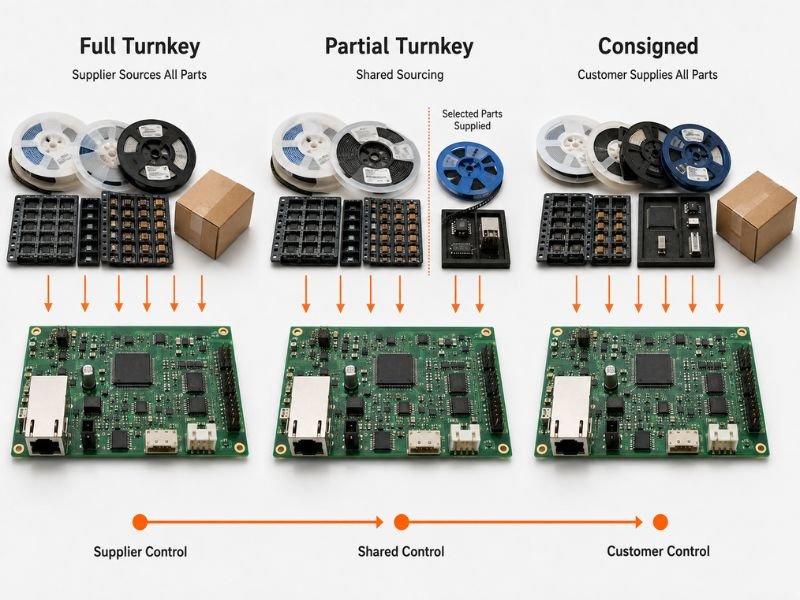
Making the right decision starts with a simple analysis of your project and your company's capabilities. If you're a startup or a small team without a dedicated procurement department, a full turnkey solution is almost always the best choice. It allows you to focus on your core competency—design and engineering—while we handle the complex manufacturing logistics. If you're a large enterprise with massive purchasing power and a finely-tuned supply chain, a consigned model might offer cost advantages. And if your project falls somewhere in between, like many do, the partial consigned model provides that perfect blend of control and efficiency. As a one-stop solutions provider, we are equipped to handle all three scenarios, providing tailored support for large-volume manufacturing to clients across industries like AI, IoT, and New Energy, from North America to Europe and beyond.
| Scenario | Recommended Model | Why? |
|---|---|---|
| Fast-Track Prototype | Turnkey | Fastest possible turnaround time with a single point of contact. |
| High-Volume Production | Turnkey or Partial | Turnkey for efficiency; Partial if you have cost-critical parts. |
| Project with Proprietary ICs | Consigned or Partial | You must supply the parts that cannot be sourced externally. |
| No Procurement Team | Turnkey | Offloads the entire sourcing and logistics burden to the manufacturer. |
| Using Existing Inventory | Consigned or Partial | The best way to use up components you already own. |
Conclusion
Ultimately, the choice between turnkey and consigned assembly depends on your project's need for control, cost efficiency, and speed. A reliable manufacturing partner will help guide you to the best fit.